
DOWNLOAD THE APP


Customer Services
Copyright © 2025 Desertcart Holdings Limited
DOWNLOAD THE APP

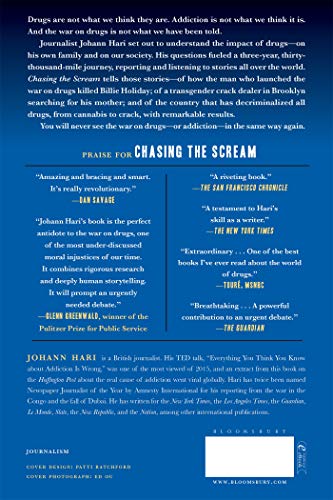
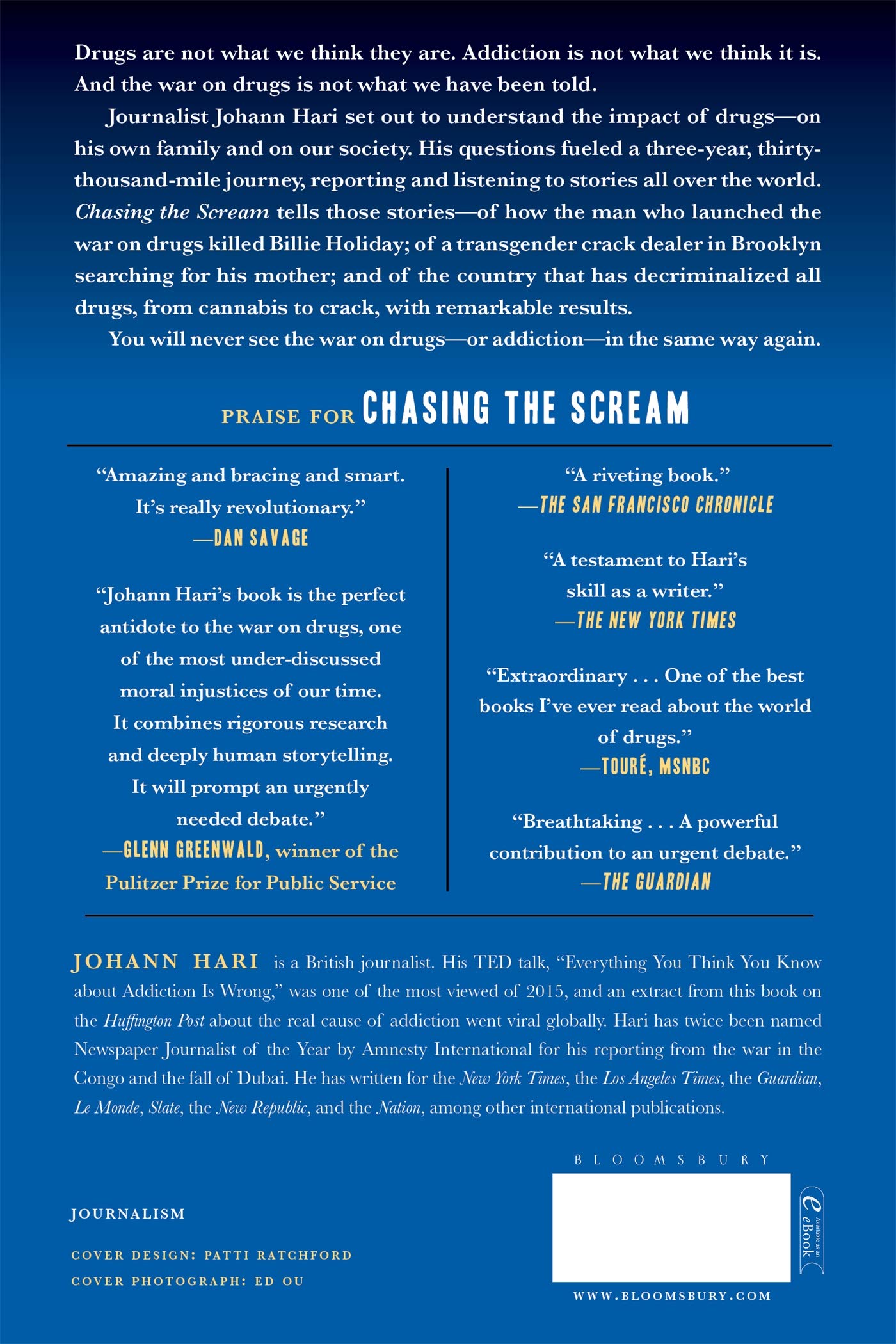

Chasing the Scream: The First and Last Days of the War on Drugs [Hari, Johann] on desertcart.com. *FREE* shipping on qualifying offers. Chasing the Scream: The First and Last Days of the War on Drugs Review: The opposite of addiction isn’t sobriety. It’s connection. - As a drug policy expert, I have to admit, I wasn’t sure how well I’d do reading this book. I have a harder time getting into non-fiction books these days — I spend most of my time reading things online, and I’ve read so much about the war on drugs that it’s hard to get excited about reading a book about it. But less than halfway through the first chapter, I couldn’t put it down – it’s an amazing read. Johann has done something really phenomenal with this book, by combining compelling storytelling with the factual highlights of the abominable history of the war on drugs, plus an undeniable blueprint for replacing that war. For drug policy experts like me, it’s a great read with some fascinating personal perspectives, while filling in a few historical knowledge gaps. Definitely a reading highlight. But if you're an average politically-aware reader who doesn’t know all that much about the drug war, I think you'll find it even more valuable. Here, in one book, you get good stories with all the verified information you need to become informed on this critical issue. I plan on buying a few copies to give to friends to read. Additionally, you'll learn through detailed analysis that much of what you think you know about addiction is wrong. Hari starts with the biggest villain of all — Harry Anslinger — by researching through all his diaries and files stored at Penn State University. I’ve known mostly about Anslinger’s war against marijuana, and now learned a few more things about what he did to get the war on drugs started in full force in the book. Johann Hari provides us, throughout the book, with incredible access to individual players in the drug war. For the history, in addition to Anslinger, his research provides detailed insights into: -- Billy Holiday, a jazz singer and drug user whose paths crossed with Anslinger’s, and -- Arnold Rothstein, who invented the modern drug gang, and was the first major figure in organized drug crime in the United States. And as Hari moved us to the present and future, these personal stories came from actual extensive interviews with an amazing array of individuals, including: -- Chino Hardin, a drug dealer for years in Brooklyn, who started his business when he was 14 years old. -- Leigh Maddox, a state trooper who later turned away from the drug war. -- Rosalio Reta, a killer for the Zetas in Mexico, who resides in a prison in Texas. -- Marisela Escobedo, who refused to accept her daughter’s murder by drug traffickers, and led protests in Mexico, until she was assassinated in front of the government palace (interviews were with family and friends). -- Gabor Maté and Bruce Alexander, who developed new ways of looking at addiction, while working with addicts in Vancouver’s Downtown Eastside. -- Bud Osborn, a poet and homeless addict who helped transform that area of Vancouver and bring about the notion of rights for addicts. -- Ruth Dreifuss, former President of Switzerland, who supported and promoted harm reduction approaches, including heroin clinics. -- João Goulão, who helped lead a revolution in drug policy in Portugal. -- José Mujica, president of Uruguay, who brought marijuana legalization to his country. … and we learn about the players in the very different legalization approaches in Washington and Colorado. Good stories, compelling arguments, and powerful facts (all fact-checked by the author and editors, with over 65 pages of notes, and a website with actual audio tapes of the interviews for those who want more). I think this is the most important book about the drug war and addiction out today. Review: Echo and reverberation ... - Essential in understanding the cost of the Drug War in pelf, lives and the destruction of society ... CHASING THE SCREAM a review by Jansen Estrup Johann Hari's book, Chasing the Scream (Bloomsbury 2015), is subtitled, The First and Last Days of the War on Drugs. One of the finest books published in a decade, Hari's odessey is brilliant in concept, daring in scope and epic in execution. The characters he encountered, dangers he braved and journey he documents make it an adventure of our age. No less world-wide than other 20th Century wars, the War on Drugs has its villains, victims and heroes, violence, waste, corruption at high and low levels and a dizzying array of dead ends from prisons to mass graves. Hari covers them all, including a convincing list of solutions to bouy our hopes. Hari's real-life characters range from well-known, like recently convicted Sheriff Joe Arpio of Arizona, to secretive Harry Anslinger, the man who started it all back in 1900. Unlike his counterpart in the federal government, the publicity hound J. Edgar Hoover, Anslinger cringed from the public eye and built his organization in the shadows, too. But a phone call from him to almost any world leader caused high-anxiety from Amsterdam to Hong Kong. You'll also recognize the New Orleans Black Hand, '20s gangster Arnold Rothstein and jazz icon Billie Holiday, but there are the unsung oponents of drug prohibition, Medical Doctors Henry Smith Williams and Gabor Mate, who acknowledge addiction as a health epidemic, not a criminal matter. One of them was destroyed by Anslinger, the other runs a clinic for addicts. You'll drive into the strongholds of infamous drug kingpins, in Tijuana, Mexico and New York boroughs, learn how 13 year-olds become masters of assassination and turf warfare … and die before they're twenty. And you'll learn who profits and who pays the bill. You will understand why Richard Nixon needed to expand the drug war in the late '60s, who his administration meant to destroy and how his propaganda came to warp the attitudes of two generations. Hopefully, some of the proven remedies will change your mind about the whole sordid mess and prompt you to action in your neighborhood and at the polls. Highly recommended for ages 12 and above, hopefully together with parents and siblings. Make it a family affair. Read it aloud, chapter by chapter. Talk to each other. Cry together.

| Best Sellers Rank | #27,609 in Books ( See Top 100 in Books ) #7 in Government Social Policy #26 in Criminology (Books) #27 in Substance Abuse Recovery |
| Customer Reviews | 4.7 4.7 out of 5 stars (5,818) |
| Dimensions | 5.5 x 1.15 x 8.2 inches |
| Edition | Reprint |
| ISBN-10 | 1620408910 |
| ISBN-13 | 978-1620408919 |
| Item Weight | 14.4 ounces |
| Language | English |
| Print length | 400 pages |
| Publication date | March 1, 2016 |
| Publisher | Bloomsbury USA |
P**R
The opposite of addiction isn’t sobriety. It’s connection.
As a drug policy expert, I have to admit, I wasn’t sure how well I’d do reading this book. I have a harder time getting into non-fiction books these days — I spend most of my time reading things online, and I’ve read so much about the war on drugs that it’s hard to get excited about reading a book about it. But less than halfway through the first chapter, I couldn’t put it down – it’s an amazing read. Johann has done something really phenomenal with this book, by combining compelling storytelling with the factual highlights of the abominable history of the war on drugs, plus an undeniable blueprint for replacing that war. For drug policy experts like me, it’s a great read with some fascinating personal perspectives, while filling in a few historical knowledge gaps. Definitely a reading highlight. But if you're an average politically-aware reader who doesn’t know all that much about the drug war, I think you'll find it even more valuable. Here, in one book, you get good stories with all the verified information you need to become informed on this critical issue. I plan on buying a few copies to give to friends to read. Additionally, you'll learn through detailed analysis that much of what you think you know about addiction is wrong. Hari starts with the biggest villain of all — Harry Anslinger — by researching through all his diaries and files stored at Penn State University. I’ve known mostly about Anslinger’s war against marijuana, and now learned a few more things about what he did to get the war on drugs started in full force in the book. Johann Hari provides us, throughout the book, with incredible access to individual players in the drug war. For the history, in addition to Anslinger, his research provides detailed insights into: -- Billy Holiday, a jazz singer and drug user whose paths crossed with Anslinger’s, and -- Arnold Rothstein, who invented the modern drug gang, and was the first major figure in organized drug crime in the United States. And as Hari moved us to the present and future, these personal stories came from actual extensive interviews with an amazing array of individuals, including: -- Chino Hardin, a drug dealer for years in Brooklyn, who started his business when he was 14 years old. -- Leigh Maddox, a state trooper who later turned away from the drug war. -- Rosalio Reta, a killer for the Zetas in Mexico, who resides in a prison in Texas. -- Marisela Escobedo, who refused to accept her daughter’s murder by drug traffickers, and led protests in Mexico, until she was assassinated in front of the government palace (interviews were with family and friends). -- Gabor Maté and Bruce Alexander, who developed new ways of looking at addiction, while working with addicts in Vancouver’s Downtown Eastside. -- Bud Osborn, a poet and homeless addict who helped transform that area of Vancouver and bring about the notion of rights for addicts. -- Ruth Dreifuss, former President of Switzerland, who supported and promoted harm reduction approaches, including heroin clinics. -- João Goulão, who helped lead a revolution in drug policy in Portugal. -- José Mujica, president of Uruguay, who brought marijuana legalization to his country. … and we learn about the players in the very different legalization approaches in Washington and Colorado. Good stories, compelling arguments, and powerful facts (all fact-checked by the author and editors, with over 65 pages of notes, and a website with actual audio tapes of the interviews for those who want more). I think this is the most important book about the drug war and addiction out today.
J**P
Echo and reverberation ...
Essential in understanding the cost of the Drug War in pelf, lives and the destruction of society ... CHASING THE SCREAM a review by Jansen Estrup Johann Hari's book, Chasing the Scream (Bloomsbury 2015), is subtitled, The First and Last Days of the War on Drugs. One of the finest books published in a decade, Hari's odessey is brilliant in concept, daring in scope and epic in execution. The characters he encountered, dangers he braved and journey he documents make it an adventure of our age. No less world-wide than other 20th Century wars, the War on Drugs has its villains, victims and heroes, violence, waste, corruption at high and low levels and a dizzying array of dead ends from prisons to mass graves. Hari covers them all, including a convincing list of solutions to bouy our hopes. Hari's real-life characters range from well-known, like recently convicted Sheriff Joe Arpio of Arizona, to secretive Harry Anslinger, the man who started it all back in 1900. Unlike his counterpart in the federal government, the publicity hound J. Edgar Hoover, Anslinger cringed from the public eye and built his organization in the shadows, too. But a phone call from him to almost any world leader caused high-anxiety from Amsterdam to Hong Kong. You'll also recognize the New Orleans Black Hand, '20s gangster Arnold Rothstein and jazz icon Billie Holiday, but there are the unsung oponents of drug prohibition, Medical Doctors Henry Smith Williams and Gabor Mate, who acknowledge addiction as a health epidemic, not a criminal matter. One of them was destroyed by Anslinger, the other runs a clinic for addicts. You'll drive into the strongholds of infamous drug kingpins, in Tijuana, Mexico and New York boroughs, learn how 13 year-olds become masters of assassination and turf warfare … and die before they're twenty. And you'll learn who profits and who pays the bill. You will understand why Richard Nixon needed to expand the drug war in the late '60s, who his administration meant to destroy and how his propaganda came to warp the attitudes of two generations. Hopefully, some of the proven remedies will change your mind about the whole sordid mess and prompt you to action in your neighborhood and at the polls. Highly recommended for ages 12 and above, hopefully together with parents and siblings. Make it a family affair. Read it aloud, chapter by chapter. Talk to each other. Cry together.
M**D
Unlike other books on addiction, this book is interesting and keep you engaged from the word go. I purchased this after watching Hari's TED talk. The human stories will make you feel compassionate for the addicts. I had a lot of Aha! moments while reading the book. Must read if you wanted to know why the war on drugs was never won.
L**G
A MUST for all activist wishing to finish the dark night of prohibition, you will find a lot of data but most important of all: you will find new courage to keep bringing the down of a new informed and enlightened way to use drugs!!!
D**M
Lo consiglio a tutti, perché c'è ancora troppa ignoranza sulle droghe/dipendenze e per questa ignoranza la gente continua a morire. Per non parlare dei Governi che lo hanno trasformato in un business; 100 anni di guerra alla droga senza alcun risultato e la gente continua a morire. Libro molto bello e molto interessante, un'arma contro l'ignoranza in un inglese non troppo ostico. Se avete dubbi vi consiglio questo articolo (stesso autore del libro): [ ... ]
M**S
Muito bom
A**R
Very interesting topic and research, compelling arguments and touching accounts. I did find it a bit too lengthy tough, I'm sorry to say: i believe it would have benefited from being a bit more succinct. But overall a recommended read
Trustpilot
2 months ago
1 month ago